
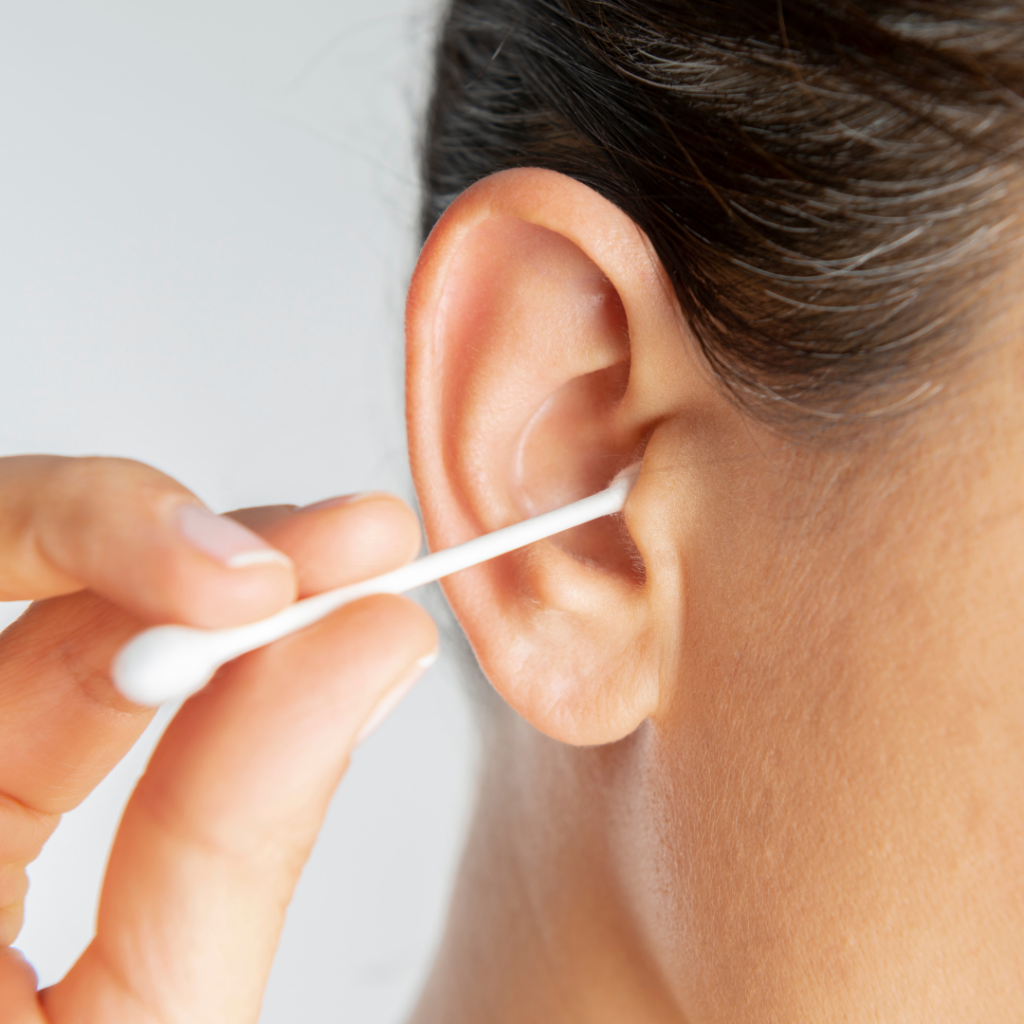
While many consider cotton swabs handy cleaning devices, placing them in the ear canal disrupts natural clearing and causes physical damage. We can determine whether earwax actually needs removal and recommend a method suited to your ear health. Routine manual hygiene is often unnecessary for ears; still, when excessive wax accumulates, we deliver safe and gentle removal solutions.
The Hidden Dangers of Cleaning Ears with Q-Tips
Biologically, earwax—known clinically as cerumen—is not an unhygienic waste product. This substance captures environmental dust, restricts bacterial colonization, conditions the delicate canal walls, and defends fragile skin. Rhythmic jaw motion and outward dermal migration move drying wax toward the external orifice, where it effortlessly washes away.
Inserting a cotton swab directly into the auditory canal interferes with this natural clearance mechanism. While the fibrous tip might extract superficial wax particles, it predominantly forces deeper accumulations toward the tympanic membrane. Ongoing cotton swab use regularly condenses wax into a solid obstruction, causing a congested feeling that drives repetitive cleaning attempts.
While cotton swabs are acceptable for cleansing the external folds of the pinna, they must never pass into the ear canal.
Types of Ear Injuries Caused by Cotton Swabs
Canal skin is thin, vascular, and highly vulnerable to mechanical abrasions. Tiny skin lacerations provoke pain and bleeding while forming entry pathways for pathogens, multiplying the chance of external ear infections. The cotton end can also dislodge from the applicator, creating a retained foreign body within the ear.
Common mechanical traumas from swabs include:
- Cerumen driven into deep obstructive impactions
- Cutaneous tearing, swelling, canal inflammation, or bleeding
- Infection of the ear canal
- Foreign matter or cotton material lodged in the ear
- Traumatic perforation of the eardrum
- Trauma inflicted on the ossicular chain behind the eardrum
- Transient hearing reduction or permanent sensorineural loss
- Ringing in the ears, balance disruption, or sharp ear pain
Although catastrophic damage remains relatively rare, unexpected arm bumps, hand slips, or excessive insertion depth easily cause acute harm.
Recommended Schedules and Timelines for Cerumen Removal
Clinical extraction of earwax is not routinely required on a fixed schedule for most patients. Physiologically stable ears continuously migrate wax outward, while standard showering takes care of the visible ear. Excessive cleaning strips natural oils, inflames delicate canal skin, and substantially elevates the chance of infection or impaction.
Removal becomes appropriate when wax blocks the canal, prevents us from examining the eardrum, interferes with a hearing aid, or causes discomfort.
Clinical Guidance for Safe At-Home Cerumen Care
Whenever cerumen remains asymptomatic, avoiding manual intervention represents the safest course of action. Simply cleanse the external ear using a damp, gentle washcloth, allowing the internal canal to clear independently.
When wax needs softening, we may recommend an over-the-counter cerumen-removal product or drops containing ingredients such as mineral oil, glycerin, saline, or carbamide peroxide. Ensure you use the exact recommended volume and follow the labeled duration instructions carefully. Cease use at once if you experience localized pain, acute vertigo, cutaneous rash, or intensifying discomfort.
Home flushing is contraindicated in many cases and should solely be conducted after an expert confirms safety and reviews proper methods. Under no circumstances should you ever use a pressurized dental oral irrigator in the ear. Reject risky methods such as ear candling, rigid metal scoops, camera-guided probes, hairpins, and home suction gadgets. Such unapproved devices easily burn canal walls, cut fragile skin, puncture the eardrum, or drive cerumen deeper.
When Should I See a Doctor for Earwax Removal?
Arrange a consultation when aural fullness continues after drop therapy, wax is severely impacted, or home interventions prove ineffective. Professional removal is also preferable when a person cannot safely hold still, has a narrow ear canal, uses hearing aids, or has medical or surgical factors that make drops or irrigation risky.
Obtain a focused audiological evaluation for:
- Unresolved ear discomfort, persistent canal itching, or touch sensitivity
- Blood, pus, clear fluid, or unpleasant-smelling drainage
- Fever or swelling around the ear
- New tinnitus or dizziness
- Sudden reduction in hearing or auditory loss that persists after wax extraction
- Suspected tympanic membrane tears or retained cotton foreign bodies
- Persistent impactions interfering with hearing aid operation
A sudden reduction in one ear’s hearing demands emergency evaluation rather than an assumption of wax blockage. Fast diagnostic testing reliably differentiates a conductive wax plug from an acute, time-sensitive sensorineural emergency.
Clinical Methods for Safe Earwax Extraction
We initiate the appointment by visualizing the canal through a diagnostic otoscope or microscope to verify wax presence and check for signs of infection, laceration, or eardrum tears. Selecting the optimal extraction technique depends upon cerumen density, canal geometry, patient health history, prior otologic surgeries, and procedural comfort.
Available professional techniques include:
- Medical-grade wax softeners administered prior to or during the procedure
- Calibrated warm-water irrigation using body-temperature fluid for intact eardrums
- Safe, gentle suction extraction executed under direct microscopic guidance
- Manual instrument clearance utilizing dedicated ear loops, fine curettes, or small forceps
Operating under direct magnification allows the clinician to avoid sensitive canal walls and halt instantly if the patient experiences pain. Resolving highly compacted or dry earwax often involves integrating multiple clinical removal techniques. Following the procedure, the ear is re-evaluated to guarantee that both the canal passage and eardrum are clear and healthy. If aural fullness, ear ringing, dizziness, or auditory impairment remains after cleaning, further diagnostic evaluations can identify the root issue.
Schedule an Expert Cerumen Removal Consultation
Should your ears feel congested or your hearing performance decline, arrange an evaluation with our audiology clinic instead of reaching for swabs. We begin your evaluation with an in-depth review of symptoms, surgical ear history, hearing aid maintenance, home cleaning attempts, and individual tendencies toward wax accumulation. Contact us to request an earwax-removal appointment.